Bootcamp
An intensive synchronous start with presentations, exercises and the first learning units.
Data Science Starters Academy
A structured, part-time programme built around open materials, monthly challenges, close support and the kind of messy problems data scientists solve at work.
Read the application guide (opens in a new tab)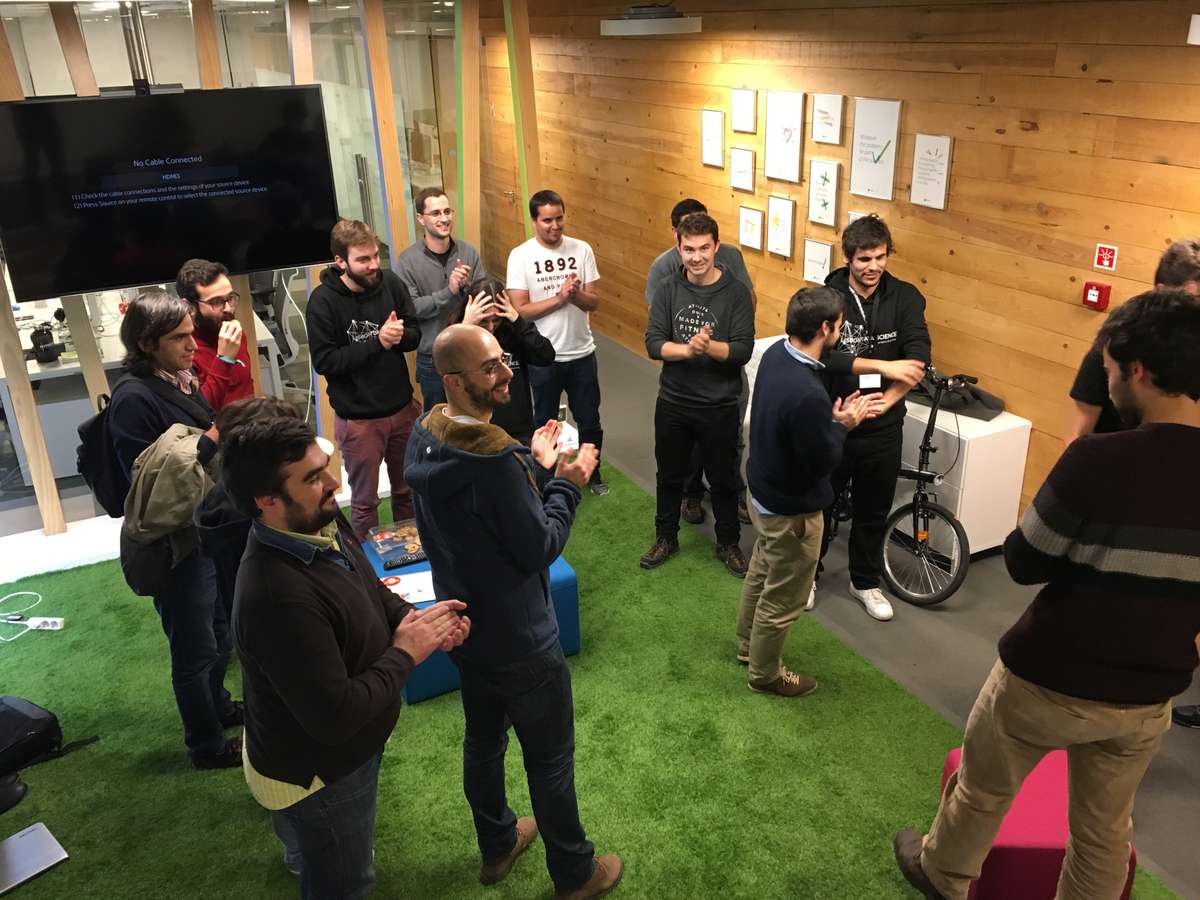
What it is
The Academy is for students and professionals with little or no data science experience, strong quantitative skills, and working knowledge of Python and software development.
The programme runs remotely through GitHub, Slack, synchronous teaching and LDSA’s grading system. Learners should plan for roughly 10 hours of work each week.
Need the Python foundations first? Meet the Prep Course →The format
Each stage adds more independence. You begin with shared foundations and finish by owning a complete data science project.
An intensive synchronous start with presentations, exercises and the first learning units.
Focused learning units develop core data science skills, with mentor support between live events.
Teams apply what they learned to ambiguous projects that require technical work, communication and judgement.
A solo, end-to-end project that brings together problem framing, modelling, engineering and communication.
Instructors, staff and peers help unblock the hard parts and keep learning moving.
Course materials remain available to independent learners and future contributors.
Curriculum
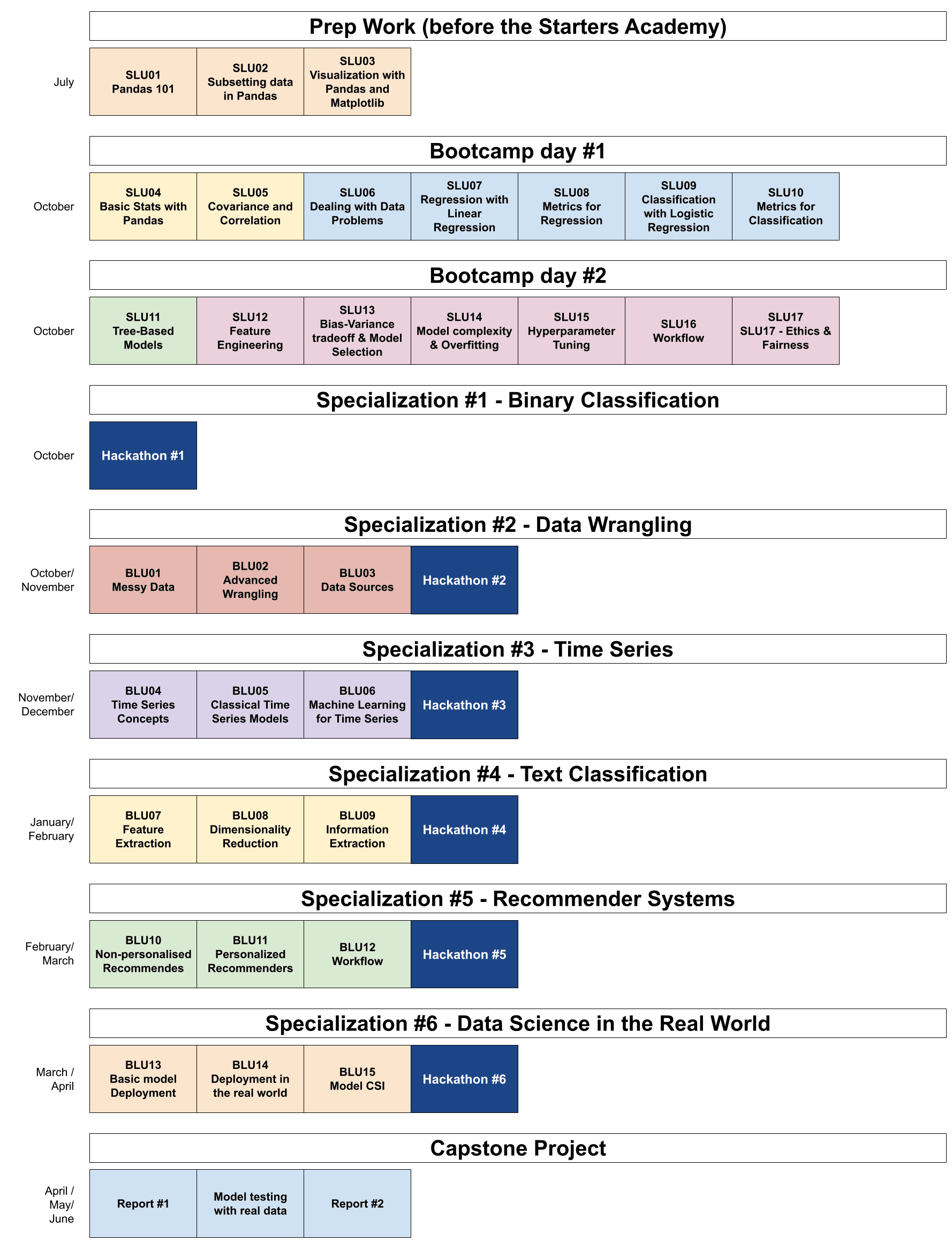
The exact units evolve with each batch. The official wiki is the source of truth for the current curriculum.
Work with real datasets, clean imperfect inputs and communicate what the data says.
Build, validate and explain models with sound experimental habits.
Go deeper into selected areas through focused learning and project work.
Turn analysis into a reproducible result and explain decisions to technical and non-technical audiences.
Questions
Dates, fees and selection details can change between editions. For batch-specific information, follow the official application guide.
You should be comfortable programming in Python, using the command line, Git and GitHub, and working with basic linear algebra and NumPy. The free Prep Course covers these foundations.
No. The Academy is designed for people taking their first steps in data science who already have the required Python and quantitative foundations.
Applicants complete a timed coding test and introductory data science exercises. Candidates who pass the technical phase become eligible for selection. The official wiki contains the current process and restrictions.
Plan for about 10 hours each week, with an absolute minimum of 5 hours during unusually busy weeks. Attendance at the synchronous opening and selected hackathons is required.
The course is designed to run online through GitHub, Slack, synchronous sessions, mentoring and the Academy submission system. Check the wiki for the current batch format.
Yes. Instructors, mentors, staff and fellow students form an active learning community throughout the programme.
LDSA has historically reserved places for people in low-income situations. Availability and application details for each batch are published in the official application guide.
Teaching and course materials are in English.
Yes. You need a laptop with at least 8 GB of RAM and permission to install the required software.
Yes. LDSA publishes its learning materials openly. Independent learners can follow them, while enrolled students also receive live events, grading, mentoring and community access.